Messi’s 2023 Calendar Exposed the Limits of an Unbroken-Season Prediction
he claim “Messi will play all the matches in 2023” was never a realistic forecast, and the calendar quickly proved why. Lionel Messi entered the year as Paris Saint-Germain’s central attacking figure, Argentina’s World Cup hero and one of the most heavily managed players in elite football. He played important matches。but not every available fixture. In January, he returned to PSG duty after the celebrations in Buenos Aires, then moved through a crowded schedule involving Ligue 1, the Champions League, international friendlies and national-team qualifiers. The idea that Messi would appear in every game sounded attractive to supporters, yet professional football rarely allows even the greatest player to follow such a script.Messi’s early 2023 workload illustrated the tension between expectation and physical reality. PSG needed him in a title race, but the club also had to protect a 35-year-old forward whose value depends as much on decision-making and timing as on raw speed. He started against Rennes in March, missed the return match after a hamstring issue, and was later rested during a period when the French champions were trying to preserve their lead. The phrase “Messi will play all the matches in 2023” ignored routine squad management as well as injury risk. A player can be fit enough to train and still be withheld from a match because the medical staff sees greater danger in ninety minutes of acceleration。
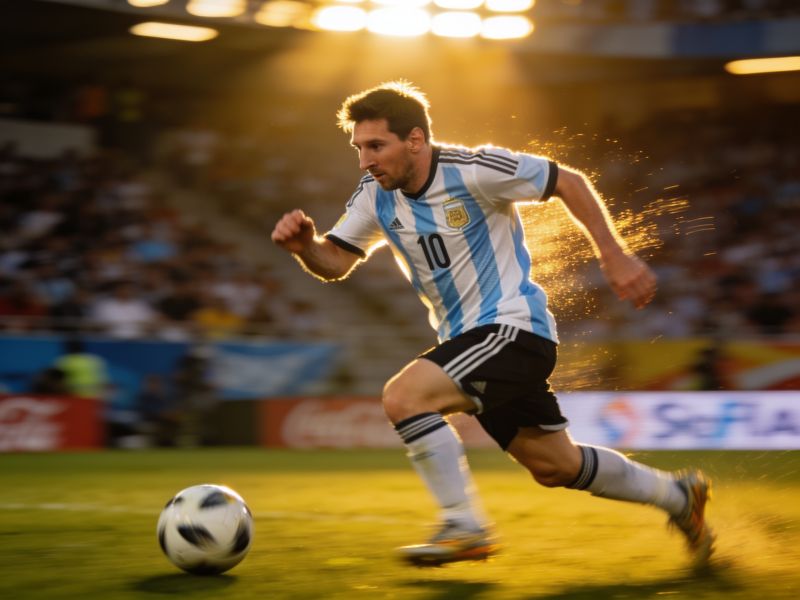
contact and recovery.The international calendar made the prediction even less credible. Messi led Argentina through a series of World Cup qualifying games after the team’s triumph in Qatar, including a memorable performance against Ecuador in Buenos Aires in September, when his free-kick decided the match. He also appeared in the victory over Peru in Lima, but Argentina did not use him for every minute of every international window. Travel, age and the timing of club fixtures all shaped the decisions. At this stage of his career。Messi’s presence is not measured only by whether he starts. A late substitution, a shortened training session or a carefully chosen rest day can preserve his influence for the matches that carry the greatest competitive weight.His transfer to Inter Miami in July changed the conversation but not the underlying reality. Messi played a remarkable sequence of games soon after arriving in the United States, scoring in the Leagues Cup and helping Miami win its first major trophy. Crowds surged。television audiences rose and each appearance felt like an event. Still, the schedule soon caught up with him. He missed matches because of fatigue and a hamstring problem, including Miami’s decisive late-season fixtures. In September, he was unavailable for the United States Open Cup final against the Houston Dynamo, a painful moment for a club that had built much of its attacking identity around him. The prediction “Messi will play all the matches in 2023” became less a report than a reminder of how quickly football can overturn confident assumptions.
By December, the record was clear: Messi had played a substantial portion of the year, delivered decisive goals, won the Ballon d’Or and remained Argentina’s most influential player。but he had not appeared in every match. That outcome should not be treated as a failure. Clubs now manage elite athletes through detailed workload data, recovery monitoring and tactical rotation, while national teams weigh short-term results against the demands of a long season. Messi’s 2023 showed that availability is not the same as commitment. He could still dominate a game after a quiet opening, change a stadium’s mood with one pass and decide a final with a single set piece. The more accurate headline would have been that Messi played the matches that mattered most—and, when his body required a pause, football continued without him.
Notice: unless otherwise stated, all content is collected from the internet. If it infringes your rights, please contact us for removal.