Errani: The Tactical Intelligence Behind an Unlikely Career
Errani doesn't overwhelm you with power. She never has. Watch her play live and the first thing that strikes you is how little margin there seems to be—a serve that barely cracks 150 km/h, a forehand that loops rather than bullets. And yet, Sara Errani has spent nearly two decades on the WTA tour, reached a French Open final。and won five Grand Slam doubles titles. That contradiction isn't a fluke. It's a case study in how tactical intelligence can stretch a career far beyond what raw athleticism would predict.
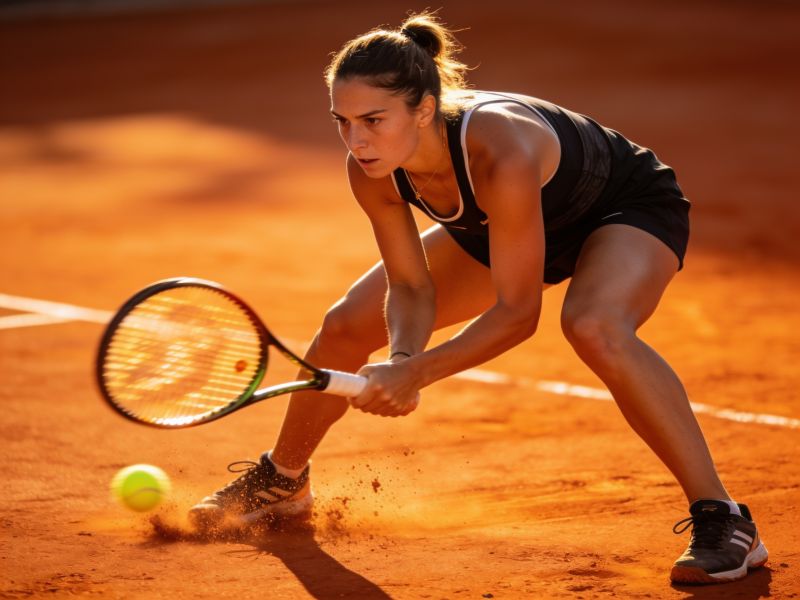
I remember a match at Roland Garros a few years back, Errani against a big-hitting opponent who was expected to blow her off the court. Instead, Errani absorbed pace like a sponge。redirecting deep returns and mixing in short slices that barely cleared the net. The crowd grew restless—they wanted winners. What they got was a chess match. She won in three sets, and the stats sheet showed she had run nearly two kilometers more than her opponent. That's the Errani blueprint: make you play one more ball, then another, until your patience cracks before her legs do.Her serve is the obvious liability, and she knows it. Rather than chase power she'll never have。Errani has built her game around the return. She stands inside the baseline on second serves, takes the ball early, and uses the opponent's pace against them. It's a risky strategy that demands exquisite timing—and it's paid off in doubles especially, where her net instincts and court awareness have made her one of the most decorated players of her generation. Doubles isn't a side gig for Errani;it's where her tennis brain operates at full capacity.There's a stubbornness to her game that I find genuinely admirable. Tennis has spent the last fifteen years obsessed with power and height—average serve speeds have climbed, and the women's game has followed the same trajectory. Errani ignored that trend entirely and still carved out a top-10 ranking. She didn't try to become someone else. She doubled down on footwork, consistency, and point construction. Young players chasing bigger serves might want to study that: not every path to the top requires a 180 km/h first serve. Sometimes it requires knowing exactly where to hit the second one.
What Errani represents, ultimately。is a kind of tennis that's becoming rarer—patient, gritty, almost annoyingly persistent. She'll probably never win another major singles title. But watching her grind out a three-setter on a clay court in some small European tournament is a reminder that tennis isn't only about highlights. It's about problem-solving, and Errani remains one of the sport's most underrated problem-solvers.
Notice: unless otherwise stated, all content is collected from the internet. If it infringes your rights, please contact us for removal.